Fascia and Soffit Repair in Wilmington — Fix the Wood Before It Takes the Gutter With It
The fudge in this trade is the wrap: aluminum coil bent over a soft board looks repaired, quotes cheap, and seals the rot in to keep working. Our fascia and soffit repair in Wilmington repairs or replaces the wood itself — the board every gutter we hang depends on — and when rot runs past the trim into roof structure, we say so and send you to a roofer instead of hiding it behind new metal.
- Soft boards found before they're a surprise
- Repair or full replacement, quoted board by board
- Ventilated soffit kept breathing
- Rot beyond the trim named honestly
On this coast, the board fails before the gutter that hangs on it
Fascia rots early here because it never gets a full day dry: salt air holds moisture against the wood, the humid months run long, and wind-driven rain slips through the gap between drip edge and fascia to soak the board along its hidden top edge. The aluminum in front of it will outlast the house; the wood behind it is the perishable part of the roofline. Fascia is usually pine or another softwood — honest lumber, with no business staying wet half the year, which around Wilmington is the standing offer. Exposure isn't even, either: the homes closest to the surf at Carolina Beach take salt and wind-driven rain at full strength, while shaded lots inland stay damp longer after every storm. Different mechanisms, same soft board.
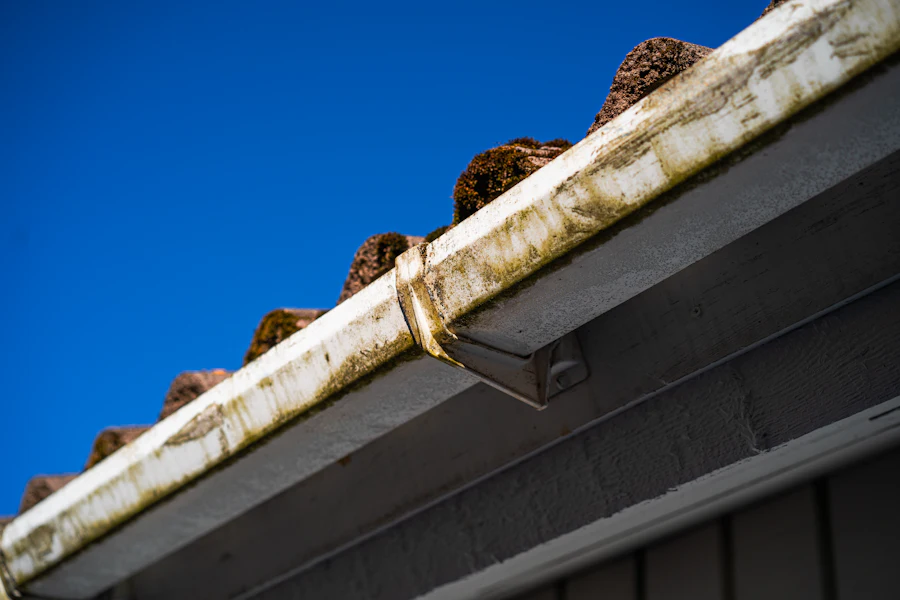
Soft wood quietly un-hangs a gutter that still looks perfect
A gutter on punky fascia fails from behind: the hanger screws end up gripping paint and mush instead of grain, the run creeps off pitch, and the first storm that loads it to the brim pulls the edge loose — usually with the aluminum itself in fine shape. Hanging new gutter on soft wood is how a good gutter job on this coast fails inside a year. A full run of water is heavy, and all of that weight hangs from whatever the screws are biting into; when the bite is gone, the failure looks like a gutter problem but is really a wood problem. Some of the sagging-run calls our repair service takes trace back to the board, not the metal — which is why the fix that lasts starts one layer deeper than the symptom.
Rot shows its hand from the ground before anything lets go
You can usually diagnose failing fascia from the driveway, no ladder involved. The board tells on itself in a handful of ways:
- Paint bubbling or peeling in a horizontal band just behind the gutter lip
- Gray-black staining where gutter meets board, or streaks wicking down from that joint
- Screw or spike heads easing outward, or a gutter edge drifting visibly off level
- Aluminum fascia wrap that ripples, dents under thumb pressure, or weeps at its seams
- Soffit panels sagging, or mildew freckling around the vents
- Sudden interest from carpenter bees and woodpeckers, which find soft wood before people do
Some boards get patched, some get replaced, and some jobs belong to a roofer
The call comes down to depth and reach: rot caught early on an otherwise sound board can be cut back, treated, and filled; a board gone soft through its thickness comes off and gets replaced end to end; and rot that has traveled past the fascia into rafter tails, sub-fascia, or roof decking is a roofer's or framer's job — we name that plainly and step back rather than trim over it. We hang gutters for a living; repairing the board they hang on is part of that job, and rebuilding roof structure is not. Fascia work gets quoted board by board before any gutter goes up, and what moves the number is footage of bad board, first story versus second, whether existing wrap has to come off, and whether soffit panels come down with it. Replacement stock is back-primed pine or a synthetic trim board that shrugs at humidity. When soffit is replaced, the vented panels stay vented — sealing them chokes the attic's air supply, and in this climate a choked attic grows moisture problems worth more than the soffit. Like-for-like trim repair is ordinarily not permit work; anything that reaches structure is somebody else's trade, and whoever takes that part of the job should confirm requirements with the city or county inspections office before cutting.
Sound wood, closed gap, then gutter — the order is the whole trick
The sequence is fixed: repair or replace the board first, close the drip-edge gap with flashing so water can't restart the rot from the top, then hang the gutter on wood that can actually hold a screw. Run it in any other order and you buy part of the job twice. This is also why the board gets probed every time old gutters come down for new seamless runs formed on site — the hour the fascia sits exposed is the cheapest inspection it will ever get. On the older houses around Castle Hayne, where decades of seam drips have had the longest head start, that probing is less a formality than the main event. Either way, the gutter is the last thing to touch the wall, never the first.
One soft board now beats a re-hung roofline later.
Point a phone camera along the roofline and send us the shot — rot reads far better in a photo than in a description.
Call (910) 597-0045